
Can an Alabama Nursing Home Be Sued for Failing to Provide Physical Therapy?
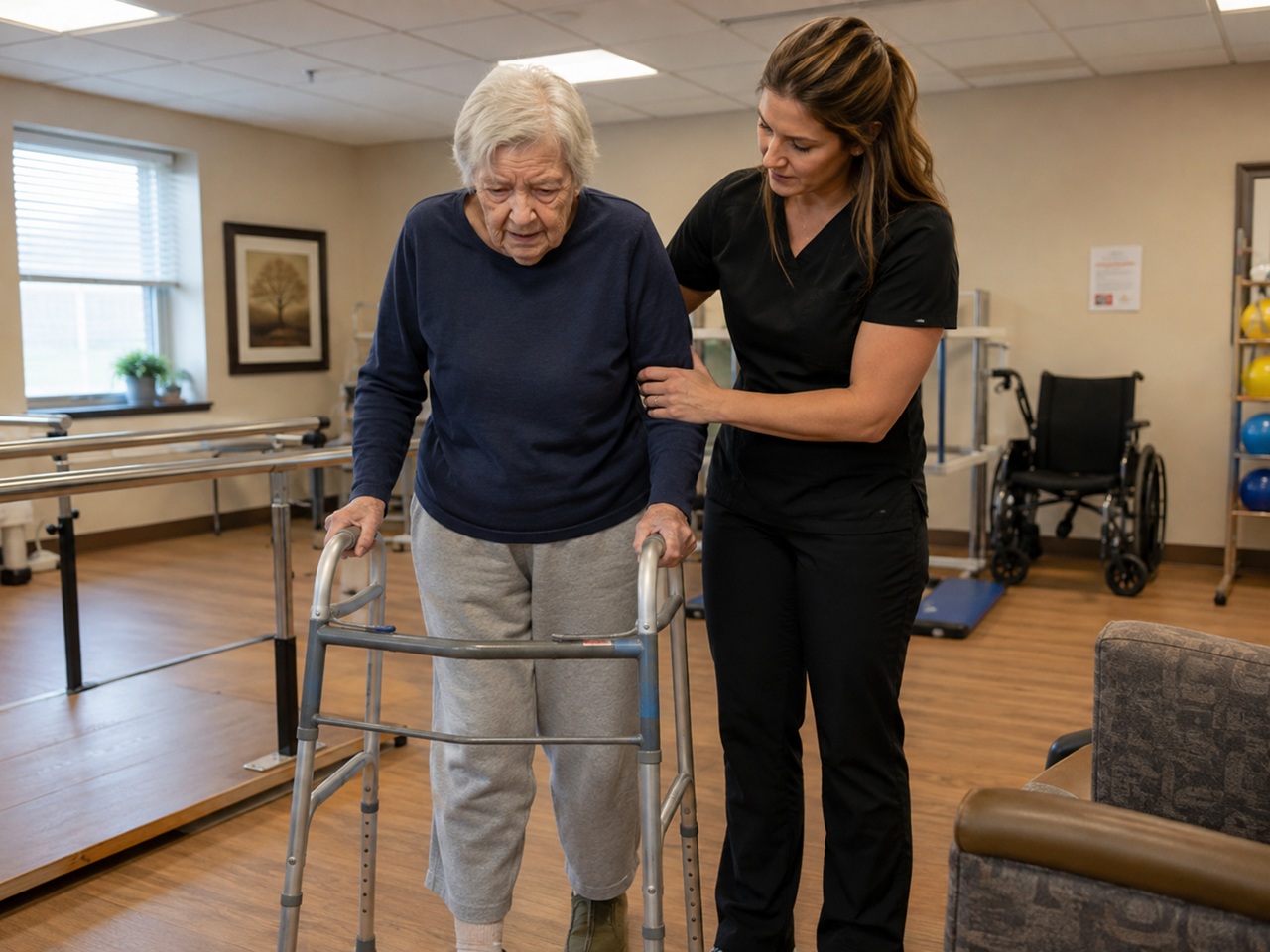
When Ordered Physical Therapy Isn't Provided, A Nursing Home May Be Liable
A resident recovering from a hip fracture, stroke, surgery, or another serious medical event may depend on physical therapy to rebuild strength, improve mobility, and regain as much independence as possible. When an Alabama nursing home fails to provide necessary care, the consequences can extend well beyond a few missed appointments.
Yes, an Alabama nursing home can potentially be sued when required physical therapy isn't provided, and that failure causes or contributes to a resident's injury or decline.
But a missed therapy session doesn't automatically establish negligence. The legal question is whether the facility failed to provide care required by the resident's orders and care plan, whether that failure fell below the applicable standard of care, and whether it probably caused the harm being claimed.
Shuttlesworth Law Firm, P.C. investigates nursing home neglect claims involving failures to follow care plans, provide necessary treatment, respond to changes in condition, and make sure residents receive the services their medical needs require.
What Do Federal Nursing Home Rules Require?
Federal regulations provide a particularly clear framework for rehabilitation services in Medicare- and Medicaid-certified nursing facilities.
Under 42 C.F.R. § 483.21, a nursing facility must develop and implement a comprehensive person-centered care plan for each resident. That plan must identify the services required to meet the resident's medical, nursing, mental health, and psychosocial needs.
The regulation also requires that services identified in the care plan meet professional quality standards and be provided by qualified people in accordance with the written plan.
Physical therapy receives even more specific treatment under 42 C.F.R. § 483.65.
If specialized rehabilitative services, such as physical therapy, are required in a resident's comprehensive care plan, the facility must either provide them or obtain them from an appropriate outside provider. Specialized rehabilitation must also be provided under a physician's written order by qualified personnel.
That doesn't mean every requested therapy session must occur regardless of the resident's condition or wishes. Treatment can appropriately change, and residents generally retain the right to refuse care. What matters is whether the facility had a legitimate clinical or resident-directed reason for the change and properly documented what happened.
Alabama Has Its Own Rule Requiring Necessary Rehabilitation Services
Alabama's nursing-facility regulations closely track the federal requirement.
Alabama Administrative Code Rule 420-5-10-.14 provides that when specialized rehabilitative services, including physical therapy, are required by the resident's comprehensive plan of care, the nursing facility must provide those services or obtain them from an outside resource.
The rule also requires specialized rehabilitation to be provided under a physician's written order by qualified personnel.
Alabama's broader nursing-facility rules require assessments of a resident's physical and functional condition, including rehabilitation potential, and use those assessments to develop and revise the comprehensive care plan.
So when therapy is medically ordered, incorporated into the plan of care, and necessary for the resident's condition, repeatedly failing to provide it isn't merely an administrative inconvenience.
It can become evidence that the facility didn't provide the level of care the resident required.
One Missed Therapy Session Doesn't Automatically Mean Neglect
A therapy session might appropriately be postponed because the resident has a fever, is hospitalized, develops a new medical condition, refuses treatment, or isn't medically stable enough to participate.
A physical therapist or physician may also determine that the treatment plan itself should change.
Those situations are very different from a pattern in which therapy simply stops without a documented clinical explanation.
Questions become more serious when records show that therapy remained ordered, the resident remained appropriate for treatment, and sessions were repeatedly missed because nobody was available, appointments weren't scheduled, or the facility otherwise failed to carry out the care plan.
Chronic nursing home understaffing can affect whether residents receive necessary care, but a facility generally can't erase its care obligations simply by pointing to a staffing shortage.
Why Can Missed Physical Therapy Matter So Much?
Federal nursing-home regulations specifically address mobility because preserving function is an important part of long-term care.
Under 42 C.F.R. § 483.25, a resident with limited range of motion must receive appropriate treatment and services to improve that range or prevent further loss when clinically possible. Residents with limited mobility must likewise receive appropriate services, equipment, and assistance to maintain or improve mobility with the maximum practicable independence unless further decline is demonstrably unavoidable.
That doesn't mean every decline after missed therapy was caused by the nursing home.
A resident recovering from a stroke, fracture, or major illness may have underlying medical conditions that affect recovery regardless of the quality of care. Some residents won't return to their prior level of function even with appropriate therapy.
Proving that connection between the missed therapy and the resident’s decline is a critical part of the claim.
A successful claim generally needs evidence showing not merely that sessions were missed, but that the failure to provide appropriate therapy probably caused or contributed to a measurable injury, loss of function, delayed recovery, or other compensable harm.
Which Records Can Show Whether Therapy Was Actually Provided?
| Record | What It May Show |
|---|---|
| Physician's Orders | Whether physical therapy was ordered and whether the order was later changed or discontinued |
| Comprehensive Care Plan | Which rehabilitation services the facility determined the resident required |
| Therapy Evaluations And Treatment Notes | The planned frequency, treatment performed, progress, limitations, and reasons for any missed sessions |
| Resident Assessments | Changes in mobility, strength, range of motion, functional status, and rehabilitation potential over time |
| Nursing And Progress Notes | Whether staff observed changes in mobility or documented why therapy didn't occur |
| Refusal Or Hold Documentation | Whether the resident refused treatment or a legitimate medical reason required therapy to be paused |
These records can be especially important when the facility's explanation changes after the family begins asking questions.
What If The Therapy Records Don't Match What The Family Saw?
A family member's observations can raise important questions, but they don't automatically prove that a therapy note is false.
Relatives usually aren't present every hour of every day. A session may have occurred before or after a visit, or the therapy schedule may have changed.
Still, specific inconsistencies deserve investigation.
If the chart repeatedly documents therapy at times when the resident was known to be somewhere else, if progress notes describe activities the resident says never occurred, or if the clinical measurements don't make sense alongside other records, those conflicts may justify a closer review.
The investigation can compare treatment notes, timestamps, therapy schedules, nursing records, assessments, billing information, witness accounts, and the resident's own recollection when they're able to provide one.
A sudden or otherwise unexplained decline in function can also be one of several warning signs that a nursing home resident isn't receiving appropriate care.
What Does Alabama Law Require To Prove A Nursing Home Negligence Case?
Alabama courts generally treat claims arising from the treatment or mistreatment of nursing home residents as medical-liability claims governed by the Alabama Medical Liability Act.
The Alabama Supreme Court explained in Ex parte Northport Health Service, Inc. that a nursing home is treated as a health care provider for purposes of the Act when the alleged injury arises from the resident's care or mistreatment.
Under Alabama Code § 6-5-548, the plaintiff must prove by substantial evidence that the health care provider failed to exercise the reasonable care, skill, and diligence that similarly situated health care providers ordinarily exercise in a like case.
The case also generally requires proof that the breach probably caused the injury being claimed.
That means evidence of a regulation or care-plan violation can be highly relevant, but the lawsuit doesn't end simply because somebody points to a missed session.
The family still has to connect the failure to an applicable standard of care and to the resident's resulting harm.
Will An Expert Witness Be Needed?
Usually, yes.
Alabama medical-liability cases ordinarily require qualified expert testimony to establish the applicable standard of care and show how the defendant departed from it.
The Alabama Supreme Court has also made clear that the expert must be appropriately matched to the particular type of care being challenged. A nursing-home administrator, physician, nurse, and physical therapist aren't automatically interchangeable simply because they all work in health care.
Who qualifies depends on whose conduct is actually alleged to have violated the standard and what type of care is at issue.
There are limited situations in Alabama medical-liability law in which expert testimony isn't required because the lack of care falls within ordinary common knowledge. A physical-therapy neglect case shouldn't be assumed to fit that exception, particularly when the dispute involves whether therapy should have occurred, what treatment was medically appropriate, or whether missed treatment caused a later functional decline.
What Evidence Can Help Build A Physical Therapy Neglect Case?
An investigation may involve more than the formal therapy chart. Depending on what happened, important evidence can include:
- The Physician's Orders And Care Plan: To establish what treatment was actually required.
- Therapy Records: To compare planned frequency with treatment documented as performed.
- Resident Assessments: To track mobility, function, range of motion, and rehabilitation potential before and after the disputed period.
- Nursing Notes: To identify changes in condition, complaints, refusals, or other reasons therapy may not have occurred.
- Staffing And Scheduling Information: When the claim involves a shortage of qualified personnel or repeated scheduling failures.
- Prior And Later Medical Records: To help distinguish the resident's underlying condition from harm allegedly caused by missed care.
- Witness Testimony: From the resident, family members, staff, or others with direct knowledge of what occurred.
- Qualified Expert Opinions: To address the applicable standard of care and, when necessary, whether the missed therapy probably caused the claimed injury.
Alabama also imposes particular pleading and discovery requirements in medical-liability cases. Under Alabama Code § 6-5-551, a complaint against a health care provider generally must describe in detail the acts or omissions alleged to create liability.
That makes identifying the actual treatment failures important from the beginning rather than filing a vague complaint and hoping unrestricted discovery later reveals what happened.
How Long Do Families Have To File A Claim?
For medical-liability claims involving an injured resident, Alabama Code § 6-5-482 generally requires an action to be filed within two years of the act or omission giving rise to the claim.
If the claim couldn't reasonably have been discovered within that period, the statute provides a limited six-month discovery provision. The law also contains an outside four-year limit subject to specified exceptions.
Wrongful death is different. Alabama's wrongful-death statute generally requires the personal representative to file within two years after the death, and Alabama courts have treated that statutory period separately from § 6-5-482 in medical-malpractice wrongful-death cases.
Those rules can become complicated when treatment failures occurred over an extended period, the resident's decline wasn't immediately connected to the missing therapy, or the resident later died.
Families shouldn't assume they know the deadline simply by counting two years from the date they first became suspicious.
What Should A Family Do If Therapy Suddenly Stops?
The first priority should be the resident's health, not the lawsuit.
Ask why the therapy stopped. Request an explanation of the current care plan. Ask whether the physician or therapist changed the order and whether the resident refused any sessions. If the resident is losing mobility or function, discuss that change with an appropriate medical provider.
If the explanation doesn't make sense or the problem continues, document what you're seeing and preserve whatever records are available to you.
A family can also report suspected neglect to the Alabama Department of Public Health, which regulates nursing facilities in the state.
When neglect has already caused serious injury, a nursing home negligence claim can require a detailed investigation of the facility's care, records, and medical decision-making.
Holding A Nursing Home Accountable Requires More Than Showing Therapy Was Missed
If a nursing home was supposed to provide physical therapy but didn't, the missing sessions can be an important part of the case. The strongest claims go further.
They establish what therapy was required, why it was required, what the facility actually provided, why any sessions were missed, how the resident's condition changed, and whether qualified medical evidence connects that failure to the resulting harm.
Attorney Perry Shuttlesworth has more than 30 years of experience representing injured people and families in Alabama. Shuttlesworth Law Firm, P.C. has obtained significant nursing home neglect verdicts and settlements, including a $1.2 million wrongful-death verdict involving a failure to provide oxygen and a $1 million wrongful-death settlement involving fatal bedsores. Prior results don't guarantee a similar outcome in another case.
If you believe an Alabama nursing home failed to provide physical therapy or other required care to someone you love, contact us for a free case evaluation. We can investigate what the care plan required, what treatment was actually provided, and whether the evidence supports a nursing home negligence claim.
"I retained the Shuttlesworth Law Firm to handle a long-term care facility case for me. Perry and his staff were prompt, responsive, professional, and courteous throughout, and most importantly, they provided highly competent legal service. They couldn't have done a better job for me." - Rick, ⭐⭐⭐⭐⭐